Awareness, learning and development and support resources
___________________________________________________________________________________________
Introduction
Domestic violence and abuse can affect anyone, regardless of age, gender, identity or background. It can also have a profound impact on those who experience it indirectly. Children and young people, in particular, may be deeply affected by witnessing domestic violence and abuse within their homes and relationships.
Domestic violence and abuse are endemic in our society and they remain some of the most significant challenges facing individuals, families and communities. Practitioners across a wide range of services will encounter people:
- who have experienced domestic violence and abuse,
- are currently living with abuse, or
- may be at risk but not yet identified.
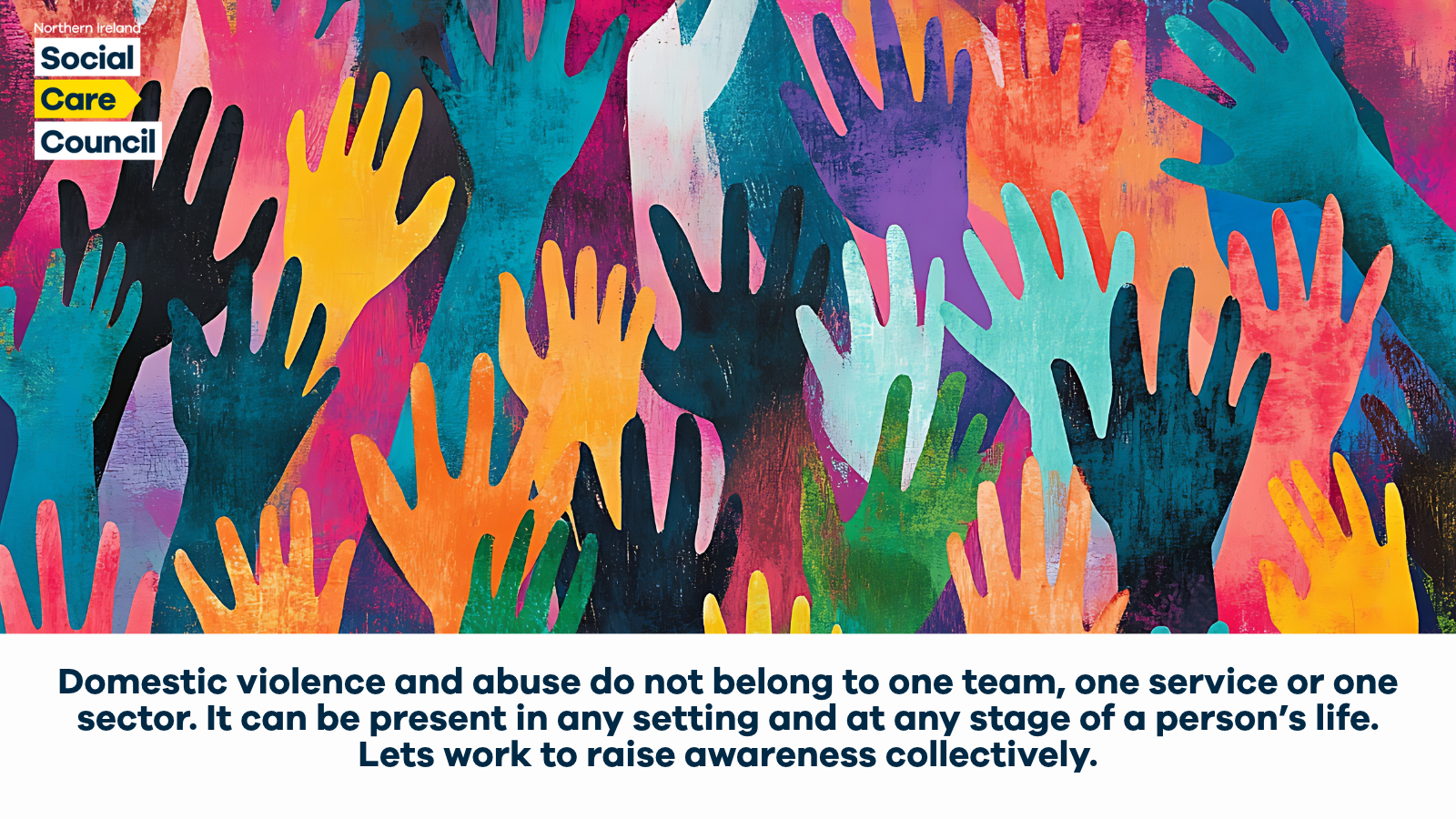
Domestic violence and abuse do not belong to one team, one service or one sector. They can be present in any setting and at any stage of a person’s life.
Understanding and responding effectively to domestic violence and abuse is therefore central to good social work and social care practice. It is fundamental to safeguarding, promoting wellbeing, upholding human rights and supporting people to live safely and with dignity.
Social workers and social care practitioners are often the people who notice when something is wrong. Through the relationships they build and the trust they develop, they can be the first person someone tells about the abuse they are experiencing. Their response, professional curiosity and actions can have a lasting impact on an individual’s safety, recovery and future.
___________________________________________________________________________________________
Why have we produced this resource?
As the workforce regulator for standards, education and training, and the awarding body for the Professional in Practice Framework (PIP), the Social Care Council works with partners to support social work and social care practitioners in developing the knowledge, confidence and skills needed to recognise and respond to domestic violence and abuse.
Continuous professional learning is a shared responsibility for practitioners, employers and partner organisations, and this page brings together information, guidance, learning opportunities and support into one accessible place to help strengthen social care and social work practice and safeguard those at risk.
This resource can make an important contribution to your learning and development in identifying and responding to domestic violence and abuse, but it is not intended to replace facilitated learning, reflective discussion and opportunities to apply learning in practice.
Domestic violence and abuse, and violence against women and girls more broadly, is not inevitable. Every conversation, sensitive enquiry, every risk assessment and timely referral can help to protect individuals and challenge the conditions that allow abuse to continue. Collectively, these actions contribute to safer families, stronger communities and a more effective safeguarding response across Northern Ireland.
___________________________________________________________________________________________
How to use this content
Use this information and content to:
- Build understanding of domestic violence and abuse.
- Access legislation, policy, guidance and learning resources relevant to Northern Ireland.
- Develop the knowledge and confidence to identify and respond to domestic violence and abuse.
- Support learning, reflection and evidence-informed practice, including for social workers undertaking qualifications within the PiP framework.
- Find specialist support services.
- Signpost people to the help and support they need.
Together, we can strengthen awareness, improve practice and ensure that people affected by domestic violence and abuse receive the support, protection and understanding they need. This resource is intended to support that shared commitment and help create a future where everyone can live safely, free from violence, abuse and coercive control.
Staff should always follow their organisation’s safeguarding and domestic abuse procedures when responding to concerns or disclosures, If someone is in immediate danger contact the Police Service of Northern Ireland by dialing 999.
NB: This is a new section to the Learning Zone and we will continue to add relevant research, links and information as these become available.
Scroll down to learn more.
___________________________________________________________________________________________
Understanding domestic violence and abuse
Domestic violence and abuse can be violent and/or non-violent and can include:
- Controlling or coercive behaviour.
- Economic and financial abuse.
- Making an individual doubt themselves.
- Manipulating the truth.
- Online, digital and technological abuse.
- Psychological/emotional abuse.
- Physical abuse.
- Sexual abuse, and/or.
- Threatening behaviour.
NB: This is not an exhaustive list.
Please click on the links below to learn more about domestic violence and abuse and how to recognise it:
- NI Direct: Domestic abuse.
- Refuge: For women and children against domestic violence – Signs of domestic abuse.
- 16 Days of Activism 2026: Ensure justice, protect survivors, end impunity.
___________________________________________________________________________________________
Please note, the content of these resources was correct at time of publication. The Social Care Council is not responsible for content of external links.
Click on the tiles below to access resources, information, and learning and development.

 Feedback