Source: This is an AI-generated image created with Microsoft Copilot. No external photograph, stock image, or third-party visual source was used.
Case summary
Involvement in adult protection processes can be an anxious and uncertain experience for service users. The Adult Safeguarding Team, acknowledged the need to remove barriers for the people they support. When completing investigations in the community, the team recognised the challenges faced by service users and their carers in both understanding the adult safeguarding role and also the language used within the service which can be complex or overwhelming for some service users.
_____________________________________________________________________________________________________________________________________
Applying the Leadership Framework – Leading practice
The adult safeguarding social work role requires team members to engage with service users by balancing risks with rights, while focusing on least restrictive options of intervention.
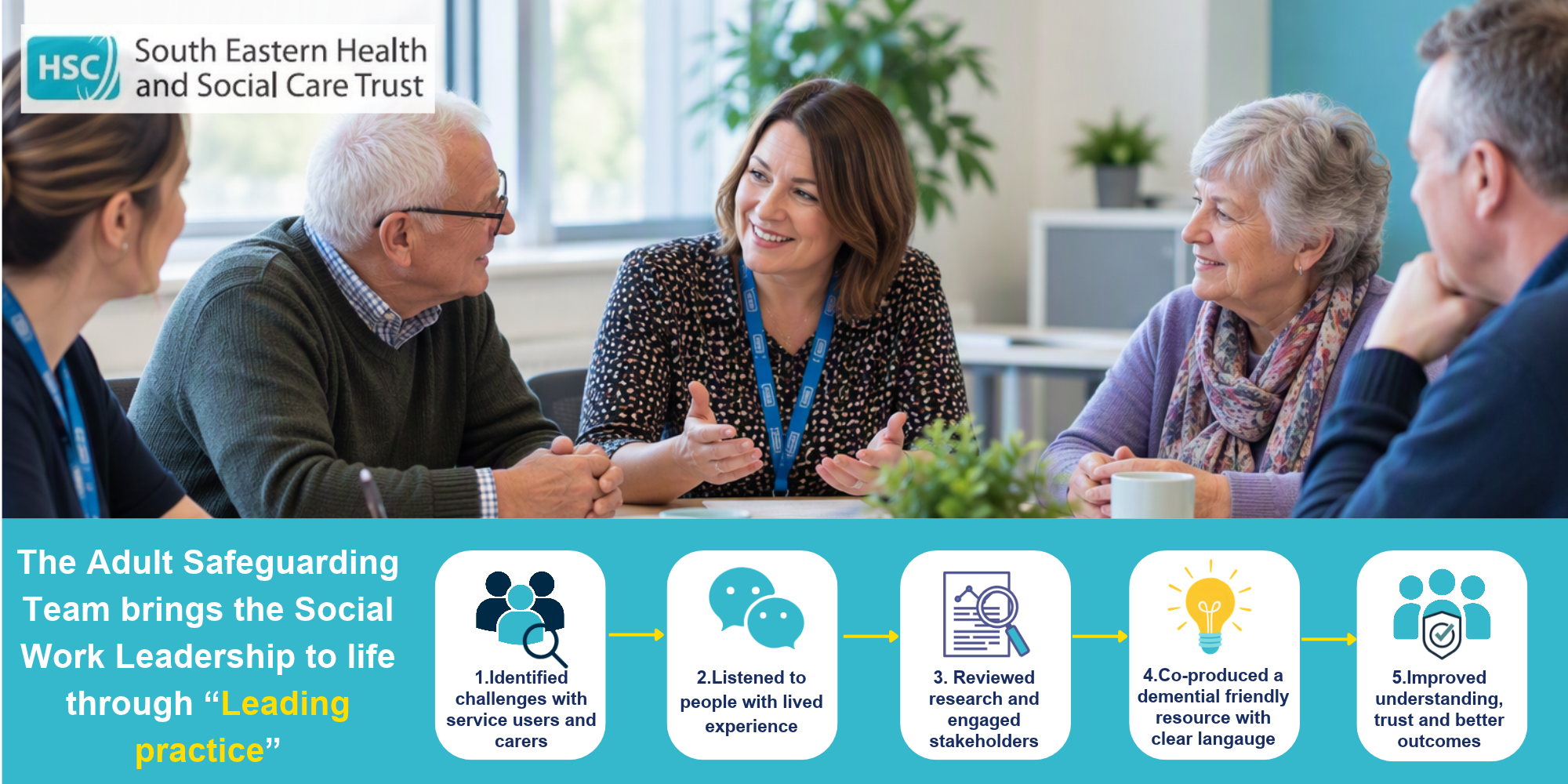
The Adult Safeguarding Team were involved with the Local Engagement Partnership (LEP), which is made up of individuals with lived experience, social work professionals and representatives from the voluntary and community sector. LEP’s specific role centers on co-production, service improvement and innovation for all. The Adult Safeguarding Team worked closely with LEP members to determine the challenges of the Adult Safeguarding Team being involved with families. The team identified that some service users with dementia may find the involvement of the team at the stage of investigation frightening because they were unsure of the team’s role and the potential impact of their involvement.
The team reviewed a range of current research alongside facilitating service user engagement sessions to understand the challenges that these individuals faced. Engagement with LEP, as well as the key stakeholders, demonstrate both this and the team’s commitment to leading practice to address unmet service user need and advocate for better service user outcomes.
As a result, and with the support of LEP, the team progressed a service improvement project to work closely with key stakeholders, such as Dementia Navigators and Dementia charities, and started a programme of early intervention; engaging with individuals and their families on the role of adult safeguarding. The Team also recognised the language used by professionals can be very confusing – what is an IO? A DAPO? A Joint Protocol? And more importantly what did it mean for the service user?
_____________________________________________________________________________________________________________________________________
Takeaway: It helps you understand what leadership looks like in practice
Championing excellent social work practice and innovation, while influencing and improving services, are key aspects of Leading Practice, and were core to this piece of improvement work by the Adult Safeguarding Team. The Leadership Framework encourages every social worker to see themselves as a leader as they engage in service improvement.
_____________________________________________________________________________________________________________________________________
Outcome
The outcome of this engagement was the co-production of a dementia friendly resource explaining the roles and terminology around adult safeguarding. The user-friendly resource is a positive example of Leading Practice.
The clear need for service users to be more involved in the overall process to determine the structure, language and visuals used in the resource was evident from the beginning but was not without its challenges. The team have expressed that, as social workers, they can have a range of assumptions around dementia and its impact on the individual. Taking a reflective stance (a significant component of Leading Practice) enabled the team to develop a deeper understanding of the impact and challenges of dementia and improve practice accordingly.
Overall, demystifying the role and language of Adult Protection in a user-friendly manner:
- Builds trust – helping individuals feel included and respected.
- Promotes participation – empowering people to become involved if they understand what is happening and why.
- Supports rights and empowerment – understanding safeguarding empowers people to protect themselves and know their rights.
- Improves outcomes – improved understanding of language and information can promote engagement and improved outcomes.